
Why Is Your Skin So Itchy In Winter? The Cold Truth About Winter Itch

Updated: Jan 29
Medically Reviewed by Ed Fuentes, D.O. | Board Certified in Family Medicine (1998-2034)

Ever notice your skin turning into an uninvited scratch-fest once the temperatures drop? You're not alone! That persistent, annoying itchiness that seems to plague us every winter is a very real phenomenon, and it even has a name: "Winter Itch" (or pruritus hiemalis).
It's a stark contrast to the generally more comfortable skin we enjoy during the warmer months. So, what's really going on when winter rolls around?
The Primary Culprit: A Severe Lack of Moisture
The biggest reason your skin gets so itchy in winter boils down to one thing: a dramatic drop in moisture. Both the air around you and your skin itself become significantly drier.
1. The Air Is a "Moisture Thief"
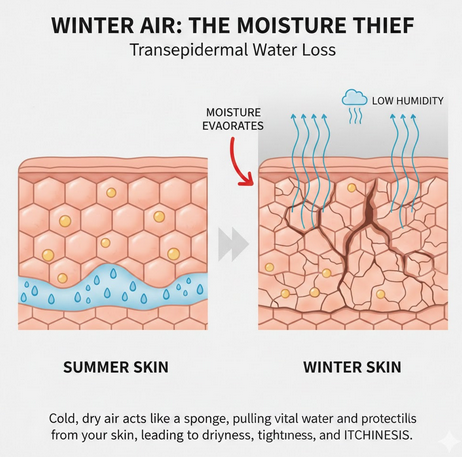
Outside: Cold air is naturally much drier than warm air. It holds less water vapor, and as it comes into contact with your skin, it acts like a sponge, drawing moisture out through a process called transepidermal water loss.
Inside: To combat the cold, we crank up our central heating. While cozy, this blasts hot, dry air throughout our homes, further plummeting humidity levels. Think of it like living in a desert indoors – and your skin feels every bit of it!
Here's an illustration of what dry winter air can do to your skin:
2. Hot Showers Are Your Skin's Enemy (in Winter)
There’s nothing quite like a steaming hot shower to thaw out on a freezing day, right? Unfortunately, this comforting ritual is a major contributor to winter itch. Hot water strips away the natural protective oils (lipids) that form your skin's vital barrier. Once these oils are gone, moisture escapes even faster, leaving your skin feeling tight, parched, and incredibly itchy.
3. Your Skin Produces Less Oil
In summer, increased heat and humidity often mean our skin produces more sebum (natural oil), sometimes even making us feel a bit greasy. In winter, however, the cold weather actually slows down this oil production. With less natural lubrication, your skin's protective barrier weakens, making it more vulnerable to dryness and irritation.
4. The Wrong Fabrics Can Irritate
Those cozy wool sweaters and synthetic fleeces that keep us warm can also be irritating. Dry, sensitive winter skin is more prone to reacting to rougher fabrics. Compare that to summer, when we often opt for loose, breathable cotton, which is much gentler.
How to Soothe Your Skin and Stop the Winter Itch
The good news is that you can fight back against winter itch! Here are some dermatologist-approved tips:
Prioritize Creams Over Lotions: While lotions are fine for summer, winter calls for heavier-duty moisturizers. Look for rich creams or even ointments (often found in tubs or jars) that are oil-based. These create a more substantial barrier on your skin to lock in moisture.
Here's a visual of the difference:

How to Combat the Itch: The Golden Rules
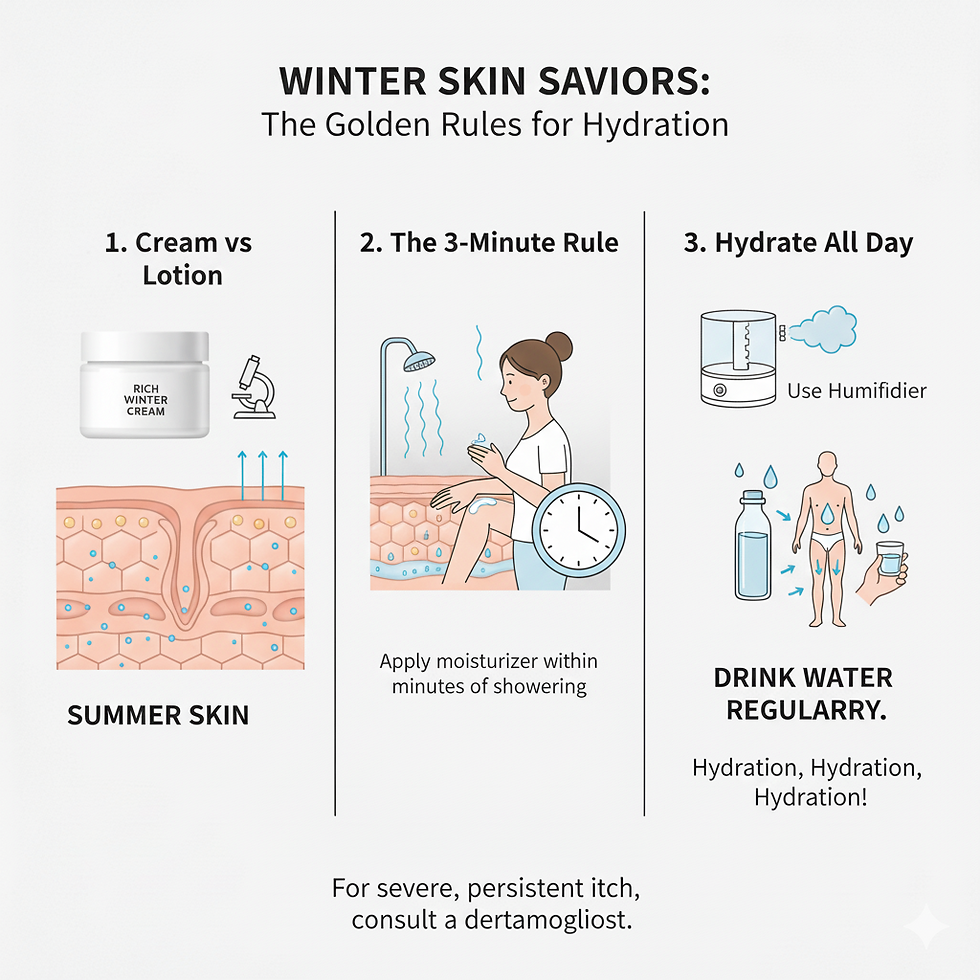
To find relief, dermatologists recommend focusing on "Hydration, Hydration, Hydration". Here are the three golden rules to save your skin:
Action, Why It Works
Switch to Creams (Ointments). Lotions are mostly water and evaporate quickly. Rich creams or ointments (in jars) are oil-based and create a better physical barrier to lock in moisture.
"The ""3-Minute Rule"""," Apply your moisturizer within 3 minutes of getting out of the shower while your skin is still damp to ""trap"" that water in."
Hydrate All Day, "Use a humidifier in your bedroom to add moisture back into the air. Most importantly, drink water regularly throughout the day to hydrate from the inside out."

When to See a Professional
If your itching is so intense it keeps you awake, or if you see red, scaly patches that look like a "cracked lake bed," you may have Asteatotic Eczema. In these cases, a family physician or a dermatologist can prescribe a steroid cream to calm the inflammation.


Comments